















Mood in Painting: How Artists Create a Feeling and How to Choose Art for Your Space
Look at edges, contrasts and the space around a subject to understand a painting’s mood—and decide which kind of attention you want it to invite in your room.
Published:
 Mood in Painting: How Artists Create a Feeling and How to Choose Art for Your Space
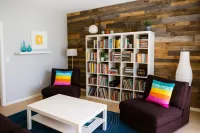
Two painters fill a picture with books, yet the shelves offer very different company. In The Art Books, Sophie Dumont arranges colored spines in two rows. The long shelf across the middle makes the picture easy to read, even where individual books lean. In Yaels bookshelves, Tali Farhi lets large green leaves spread across the books. You have to look around them to follow the shelves.
Dumont’s arrangement can feel peaceful because so much fits into that clear division. Farhi’s is more intimate: a pot half hidden by a leaf or a book laid sideways can bring somebody’s room to mind. “Peaceful” and “reflective” describe these readings. Another viewer may find Farhi’s crowded shelves comforting and Dumont’s orange spines lively. You can compare what makes each impression possible without needing to agree on one label.
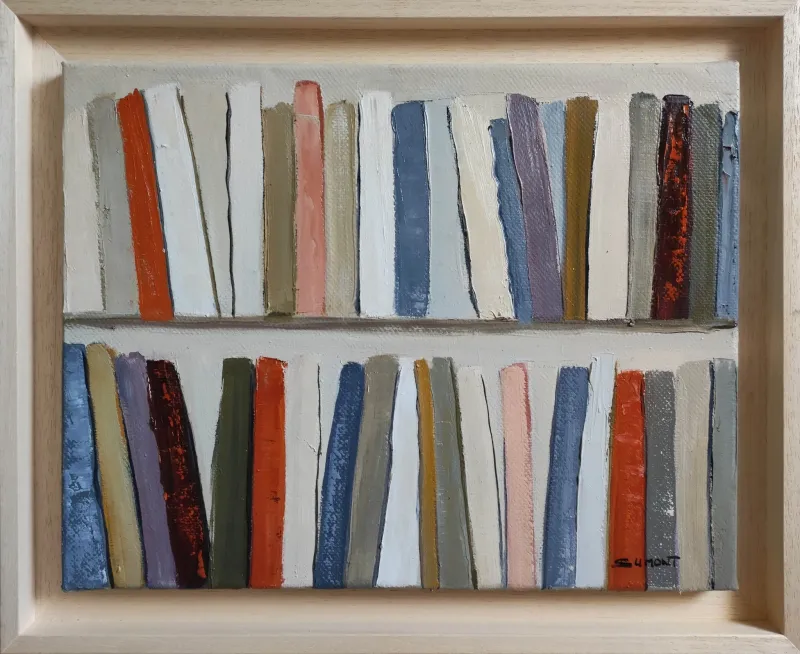
The Art Books by Sophie Dumont. Catalog photograph; images are not shown to a common physical scale.
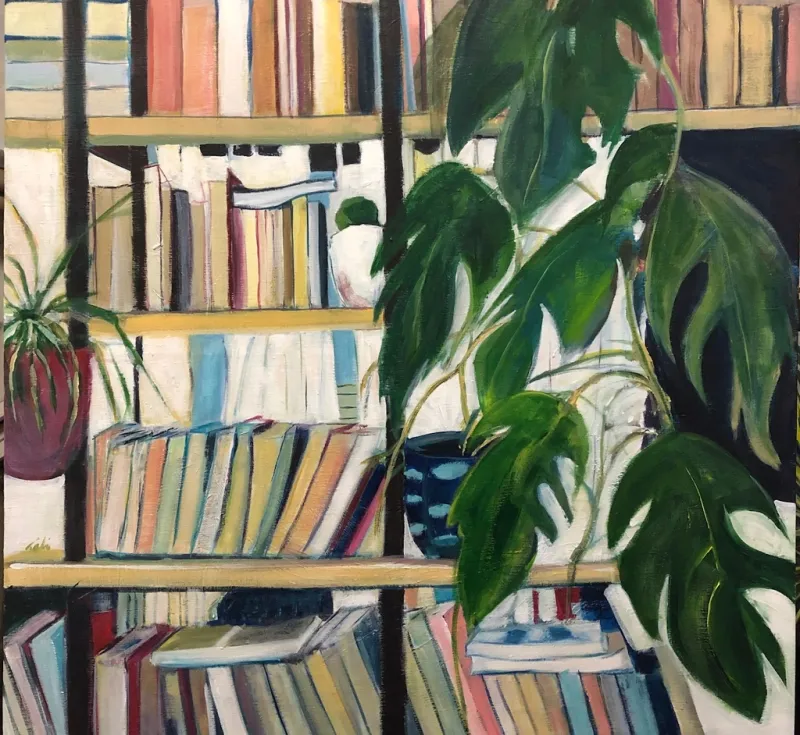
Yaels bookshelves by Tali Farhi. Catalog photograph; images are not shown to a common physical scale.
Follow an edge. In Dumont’s painting of ordered bookshelves, the horizontal shelf stays visible across the picture. A clear line gives your eye a route it can complete. Farhi’s shelves disappear behind foliage and return on the other side. Those interruptions make looking a little less direct. When a painting feels quiet or elusive, check whether its outlines offer a clear path or leave something for you to piece together.
Locate the strongest contrast. The dark gaps between Dumont’s pale books separate one spine from the next. Orange turns up in both rows. Farhi’s large dark leaves cover much of the bright shelving behind them. The contrast there gathers your attention around the plant. Before calling a painting busy, see whether its strongest light-dark difference helps you find a main shape.
Notice how much can overlap. Books occupy nearly all of Dumont’s image, but the two rows keep their places. In Farhi’s painting of books and overlapping leaves, pots, foliage and shelves compete for space. The arrangement feels lived in to me because you can imagine reaching past a leaf for a volume. A dense picture may appeal for that sense of use; a simpler one may suit someone who wants to take in the whole composition quickly.
Before choosing a mood, decide how much attention the wall should attract. Beside an open bookcase, Farhi’s overlapping leaves would add another layer of shapes to a busy corner; on a plain wall, the painted shelves could become its main event. Dumont’s long shelf offers a clearer line to set above a desk, though its orange spines still bring color into the room. Neither choice requires matching every furnishing. Start with the feature you want to notice, then use these five guides to compare ways of placing it.
Would you like the picture to be easy to take in?A broad sky, a steady band of color or a recognizable silhouette gives you something to find quickly. Calm or Serene? Choosing Paintings That Put a Room at Ease starts with the view from a guest bed and considers what remains interesting once the main shape is familiar.
Do you enjoy an image that leaves something unexplained?A softened outline and an unlikely event can both invite curiosity, though they do so differently. In Dreamlike or Mysterious? How Painters Create Two Different Moods, a dissolving tiger and a strange dinner offer two ways to keep looking. The guide also considers a bedroom and the wall beside a desk.
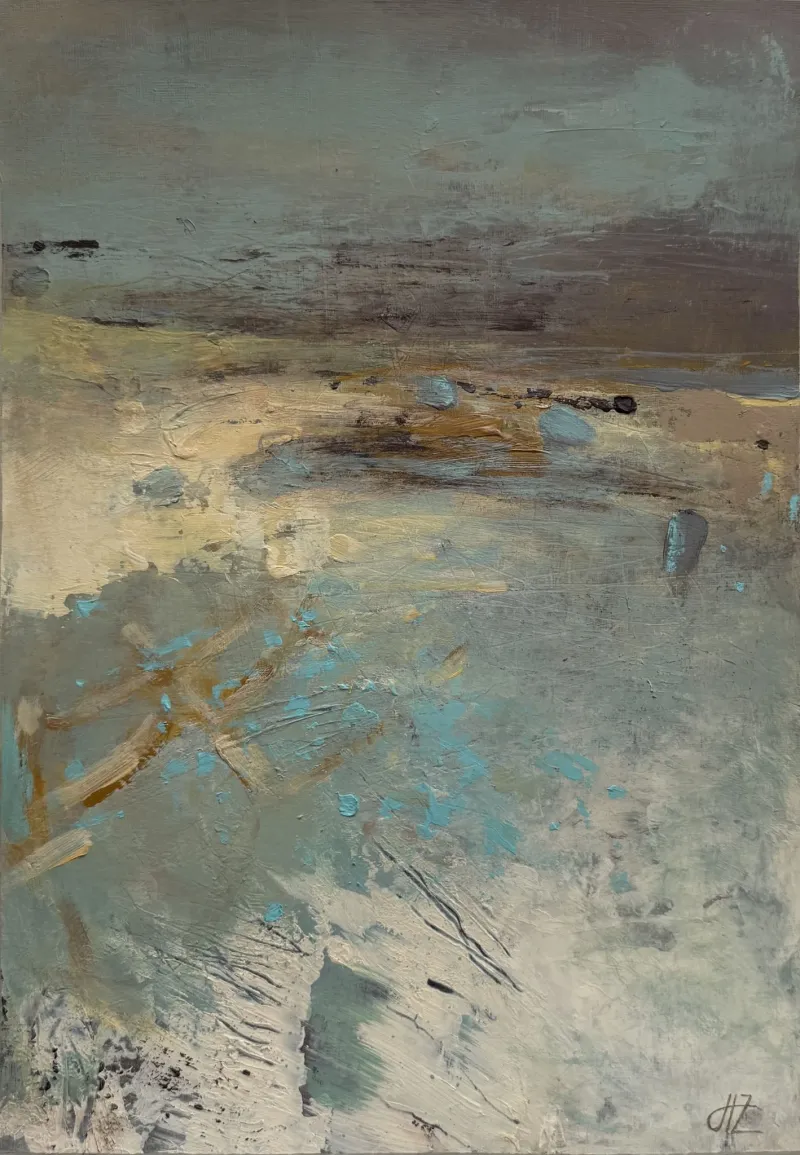
Are you drawn to familiar things or to small details in the paint?A painted room can recall a place you know. A thin mark along a horizon can hold your attention without that association. Paintings for Reflection: Choosing Art You’ll Keep Looking At develops this choice through a study comparison, a candlelit figure and a scene with several people.
Should the painting echo the room or provide a warm accent?Look at what already repeats around the proposed wall: chair backs, shelves, upholstery colors. A painting can pick up one of those relationships. It can also concentrate attention on a warm passage of color. Warmth or Harmony? Choosing Paintings for Shared Spaces compares those possibilities from a place at the dining table.
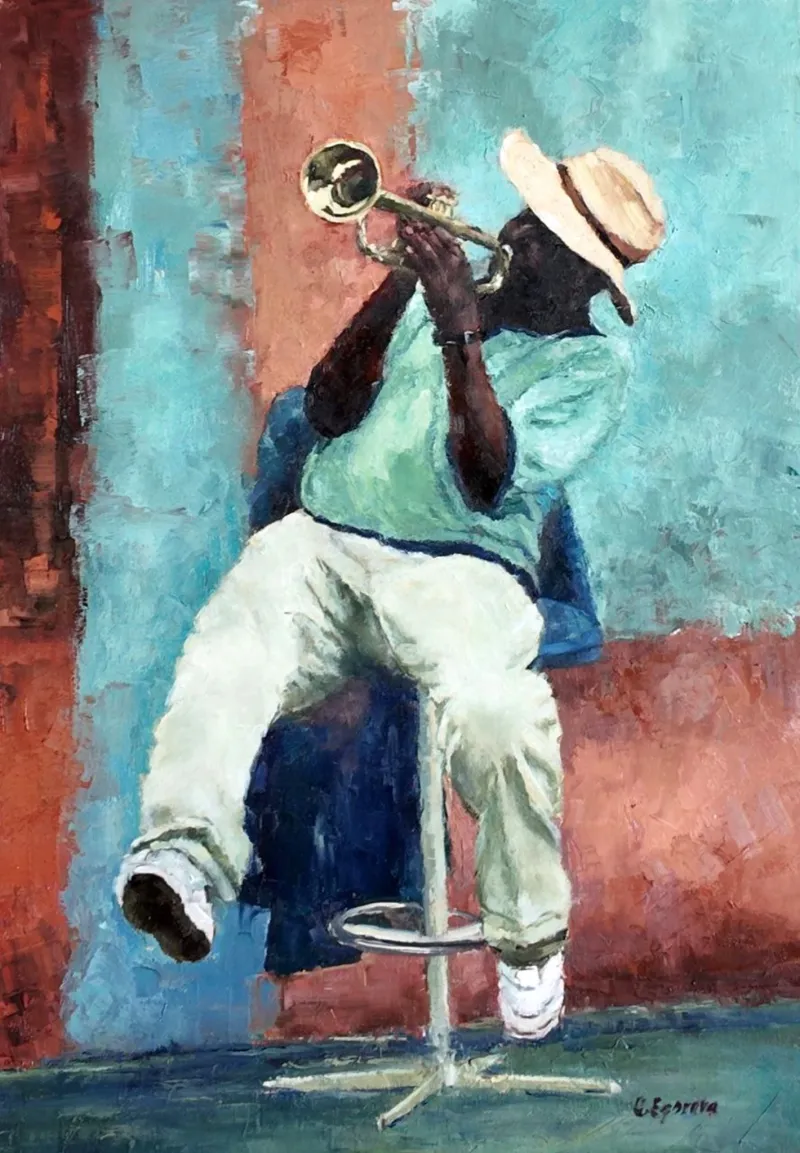
What needs to hold its presence across the room?A figure’s stance may register from the doorway; a musician’s hand asks for a closer view. Confidence, Inspiration and Empowerment: Choosing Art for Large Walls and Lounges connects those differences to viewing distance and the paintings’ actual dimensions.
Write down the detail that attracted you to each candidate: the clear shelf, a disappearing outline, a patch of gold. Then stand or sit where you would usually see the painting. Check whether a lamp, a door or the back of a chair would interrupt that part of the picture. Use the listed artwork dimensions and any proposed frame dimensions to mark its outline on the wall. Look at the space left around it: a crowded arrangement may need fewer neighboring objects before it needs a different painting.
Keep a photograph of the wall beside each shortlisted artwork image. A pale picture close to the wall’s tone will have a quieter boundary; a dark frame can give it more definition, but also makes the outline more conspicuous. Consider that tradeoff in the light you normally use the room in. For a shared space, ask the other person which detail they would want to keep seeing. The best reason to choose a painting may be something you both notice from your usual places in the room.