








Paintings for Reflection: Choosing Art You’ll Keep Looking At
Choose paintings for reflection that reward a closer look, and give their details room beside a desk, a bedroom chair or a shared seating area.
Published:
 Paintings for Reflection: Choosing Art You’ll Keep Looking At
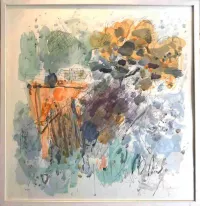
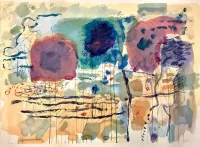
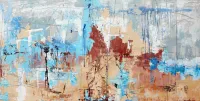
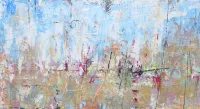
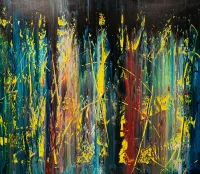
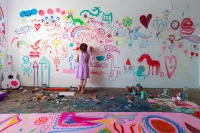
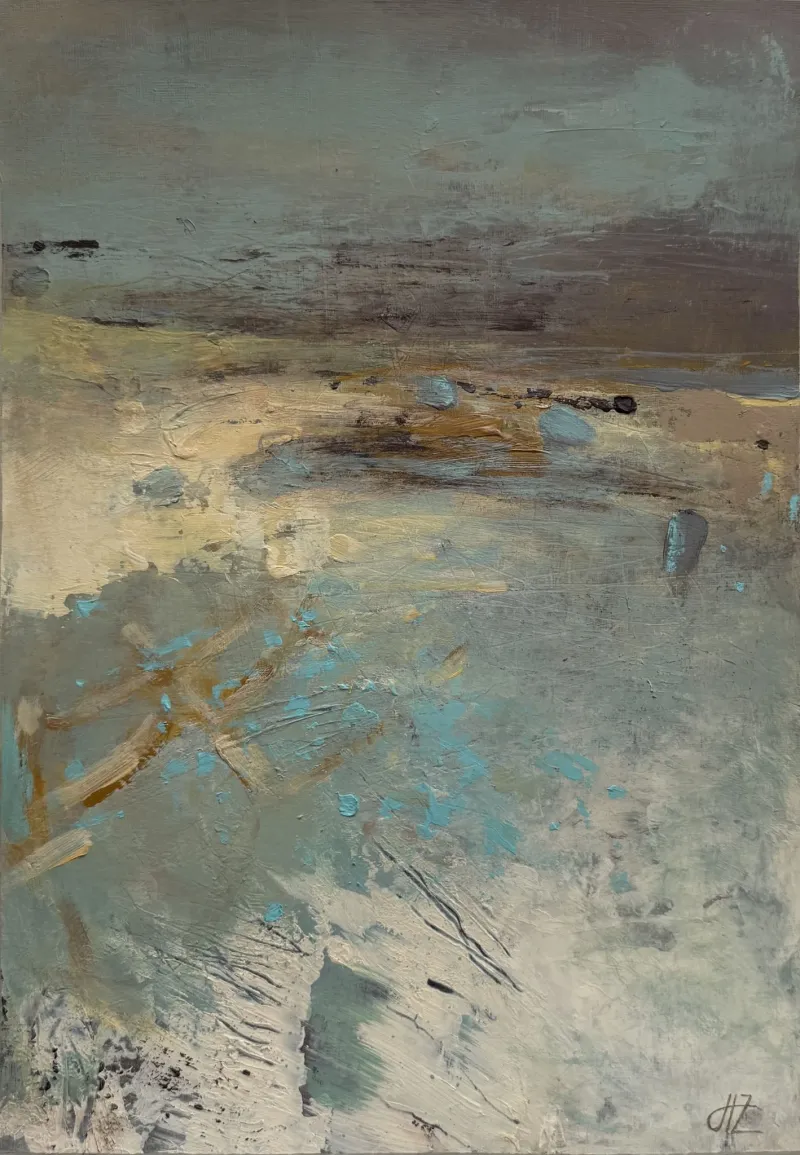
In Tali Farhi’s Yaels bookshelves, a book lies flat across several upright spines. Reflection can begin with a little leap from a painted object to somebody you remember. In Kestutis Jauniskis’s Landscape 53, a narrow blue horizon carries a scatter of upright gray marks. Contemplation might begin by following those marks, then noticing how much warmer the ground looks below them.
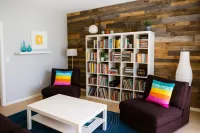
That sideways book looks as though someone wanted it within reach. Below it, a row of spines leans toward a dark blue pot and a green leaf. Spend a moment with Farhi’s painting of books and houseplants and see which part feels familiar. Above a lightly furnished desk, the books and leaves introduce the layered feel of a well-used study. On a wall already crowded with shelves, the painted stacks could become more of the same. A memory of someone’s shelves can guide your choice of paintings for quiet reflection in a study; a clear wall gives that association space to emerge.
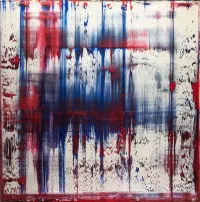
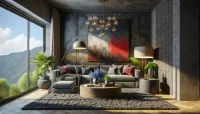
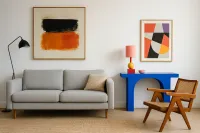
There’s very little to name in the upper part of Jauniskis’s pale-sky landscape. Below the broad sky, small gray uprights interrupt a blue horizon, with ochre, orange and a dab of red in the ground. That open upper area offers a visual pause beside a desk covered with papers. The colored strip rewards a closer seat, so keep it clear of a monitor or a tall arrangement on the desktop. Compare how much detail sits low in the picture when you open other contemplative paintings for a study. The study examples suggest the difference between adding a furnished scene to a spare corner and leaving more open space in the view.
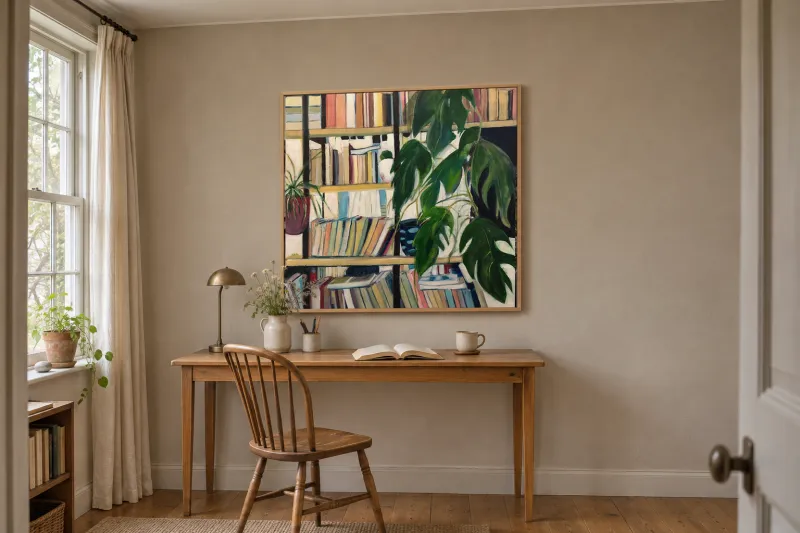
Yaels bookshelves by Tali Farhi. Room visualization; concept only — scale not verified. Frame shown for illustration. Catalog and source aspect ratios differ.
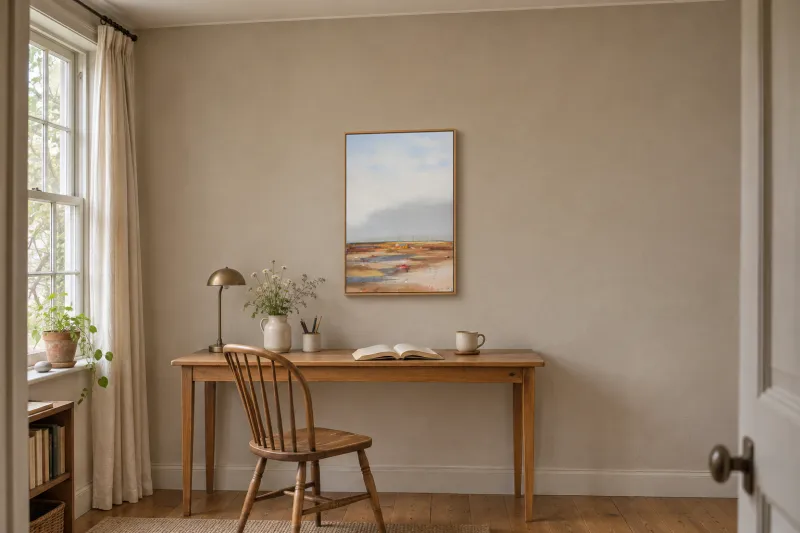
Landscape 53 by Kestutis Jauniskis. Room visualization; concept only — scale not verified. Frame shown for illustration.
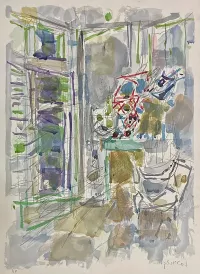
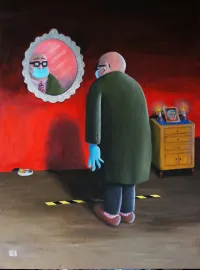
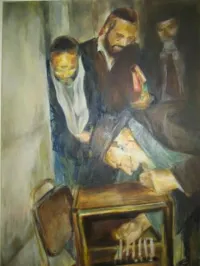
In Candlelight, Petra Gruiters gives the small flame a broad field of dark around it. The folds of the woman’s white sleeve catch the light as she holds the candle. Her fingers steady the holder, and her other hand takes its weight from underneath.
On a pale bedroom wall, this candlelit portrait reads as a strong dark shape. Near a chair, the hands become easier to study than they would be across the bed. Keep nearby objects low enough that the gesture stays visible from the seat. A deep wall color would soften the contrast around the frame; on a light wall, allow the portrait to be the main dark accent. As you look through bedroom paintings that invite reflection, consider whether you want that concentrated presence or something that blends more gently into the room.
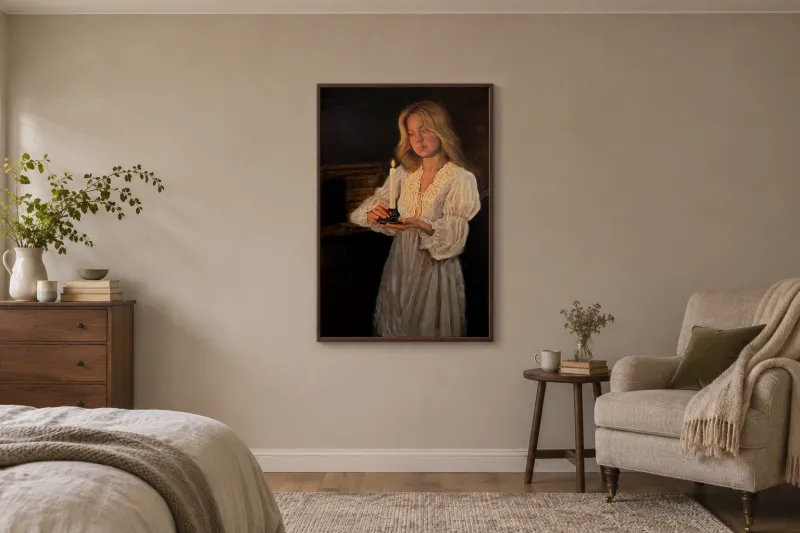
Candlelight by Petra Gruiters. Room visualization; concept only — scale not verified. Frame shown for illustration.
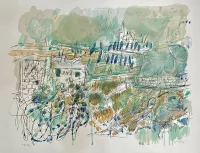
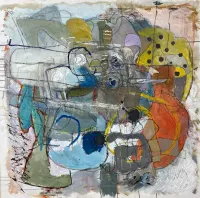
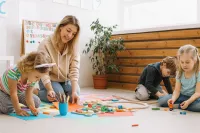
There’s an easel, an open book and a laptop in Adaeze Adinnu’s Life is a tightrope walk. A low gray wall runs behind the figures, with blue mountains and open sky beyond it. In the foreground a figure sits on the floor with one hand to her face. From there your eye might travel across the round table to the person at the laptop, whose hand also rests against her face. That echo ties two people together even as each attends to something of her own.
If you’re choosing introspective paintings for a living room together, it helps to know what each of you sees in Adinnu’s four-figure scene. One of you may recognize the pleasure of sprawling with a book; the other may return to the figure sitting apart. The room example picks up the painting’s blue in a throw and cushion, with plain upholstery beneath the busy scene. That gives the painting a connection to the seating without repeating its many shapes. Before deciding on a wall, check the view from both seats: a placement above the sofa favors someone facing it, while the person sitting underneath will need another position to spend time with the figures.
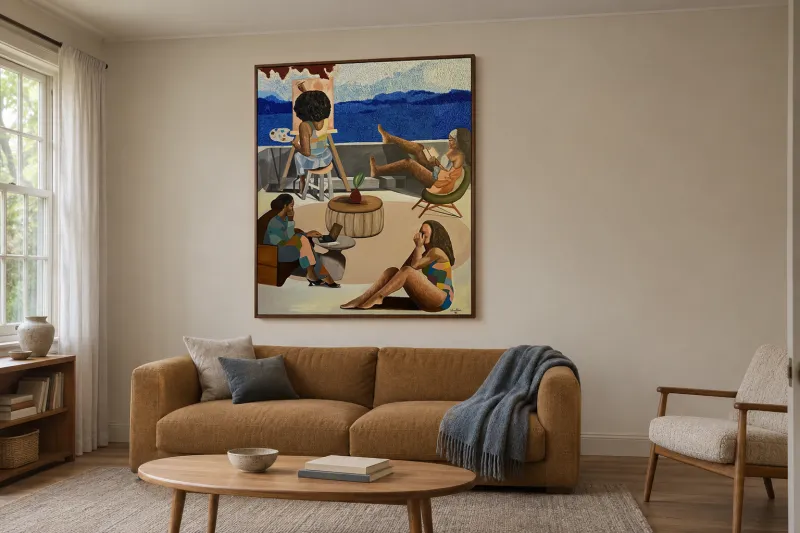
Life is a tightrope walk by Adaeze Adinnu. Room visualization; concept only — scale not verified. Frame shown for illustration.
Before choosing, think about the detail you already want to return to and where you would sit to see it. Give that view a clear place in the room; the best wall may be beside your usual chair rather than the largest empty surface.