




Dreamlike or Mysterious? How Painters Create Two Different Moods
Choose dreamlike or mysterious paintings by the presence you want on the wall, then use background and viewing distance to bring out their details.
Published:
 Dreamlike or Mysterious? How Painters Create Two Different Moods
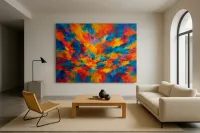
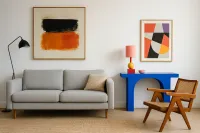
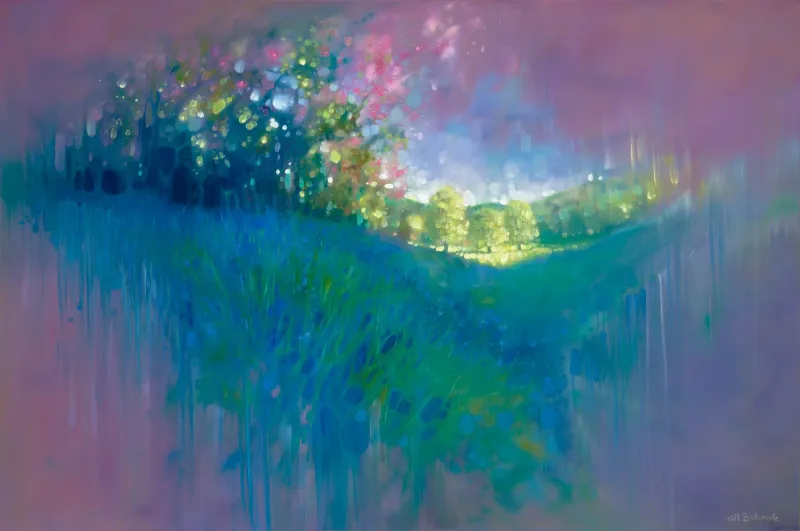
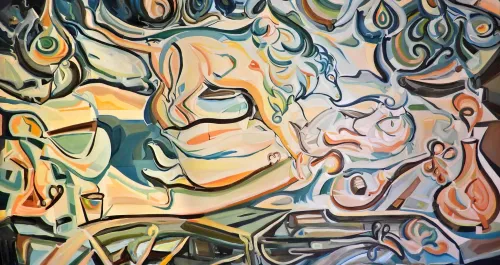
In Gill Bustamante’s The Tiger in the Ether, the tail curls into streaks of gold and lilac until it’s hard to say where the tiger ends. That gradual loss of an edge gives the painting its dreamlike quality. Korin Abisdris gives the white face on the plate in Dinner a firm black outline. You can see exactly what’s being served, right down to its blue eyes. The mystery is how calmly the diner sits down to a meal like this.
The individual whiskers in Bustamante’s dreamlike tiger painting reward a close view. From the worktable, the lilac field becomes more prominent. Against the pale, textured wall in the studio example, it leaves a broad wash of color above the tools and sketchbook. For a similarly gentle backdrop, look through dreamlike paintings for an art studio for edges that remain soft at your usual working distance. Busy pinned sketches around the frame would make that quieter effect harder to see; leave a clear patch of wall around it.
A woman in a yellow jacket has her knife and fork poised over the face in this strange dinner scene. Her grip looks familiar from any supper table, but the meal keeps the scene unsettled. The blue field and white margin make a crisp focal point against the same studio wall. When choosing paintings with a sense of mystery for an art studio, decide whether you want that strong interruption above your workbench or on a side wall you turn toward deliberately. For painters, a quick sketch of the hands with a slice of melon between them shows how much of the mystery comes from what she is about to cut.
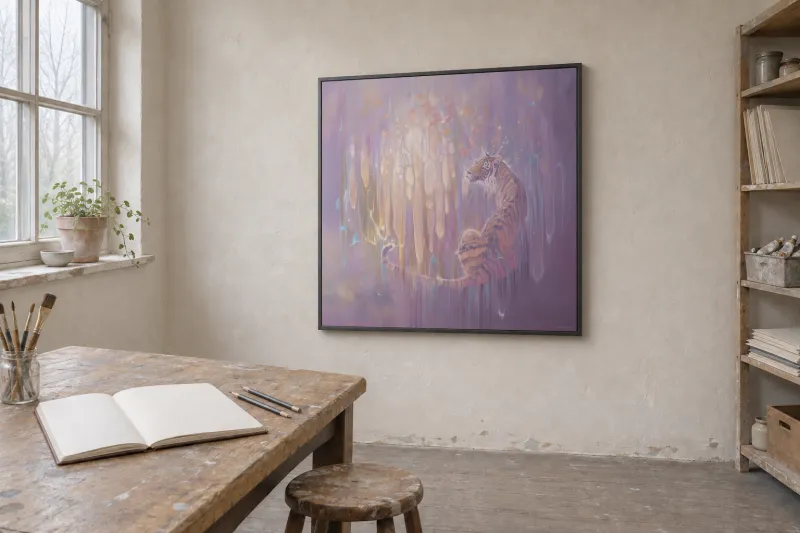
The Tiger in the Ether by Gill Bustamante. Room visualization; concept only — scale not verified. Frame shown for illustration.
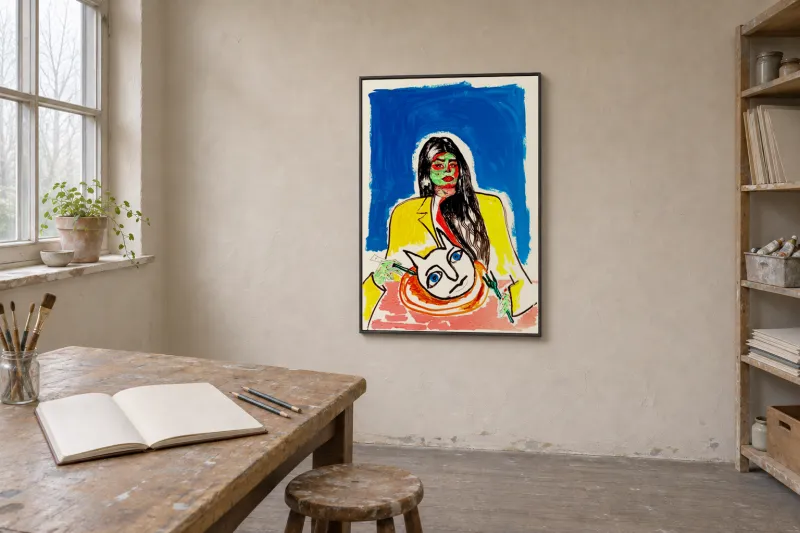
Dinner by Korin Abisdris. Room visualization; concept only — scale not verified. Frame shown for illustration.
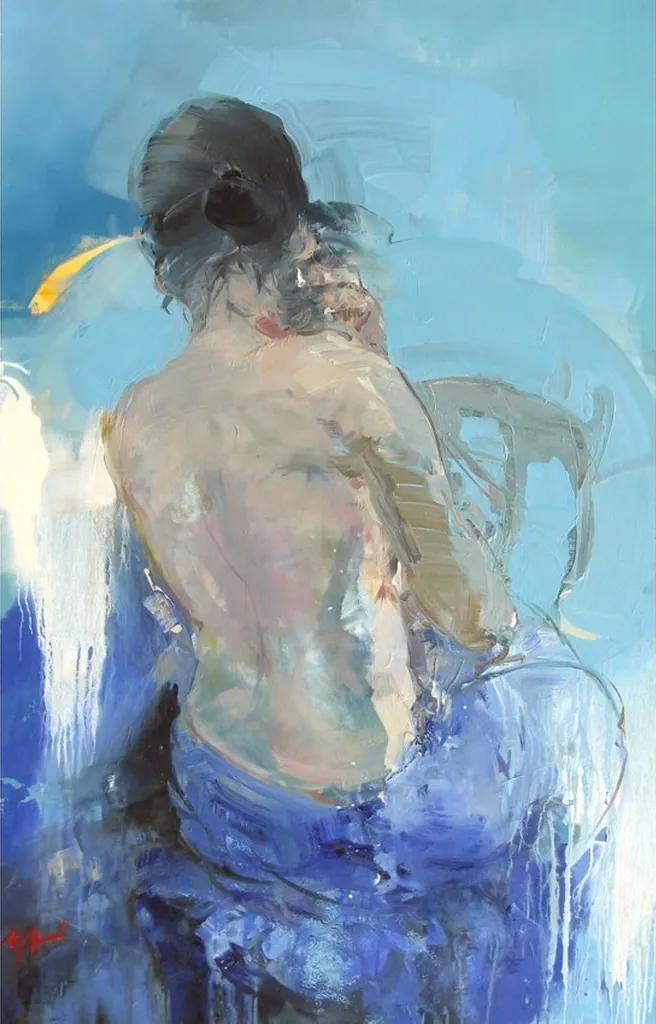
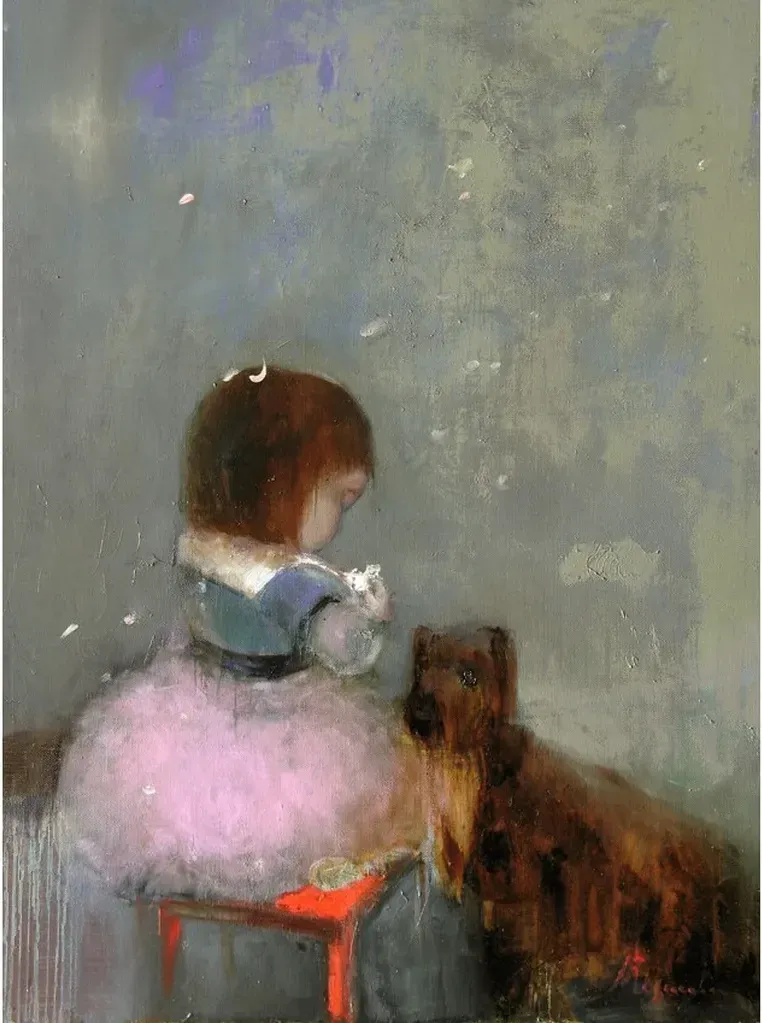
In Swallow Song by Svetlana Rezvaya, a barefoot woman sits on a wooden chair, eyes closed, knees drawn up to her chest. Her dress billows to the right below swallows balanced on thin branches. In the bedroom example, plain upholstery and curtains leave that drifting movement easy to follow. A strongly patterned curtain beside the painting would introduce another set of shapes; a plain fabric lets the painted dress supply the movement.
View the seated figure and swallows first as a thumbnail, then at full size. The curve of the fabric is easy to pick out in the smaller image. Up close, the birds have individual shapes, and some sit a little apart. Which detail would you miss? For a wall opposite your bed, shortlist dreamlike paintings for a bedroom whose main shapes you enjoy from across the room. If counting the birds is half the pleasure, consider a spot beside your reading chair.
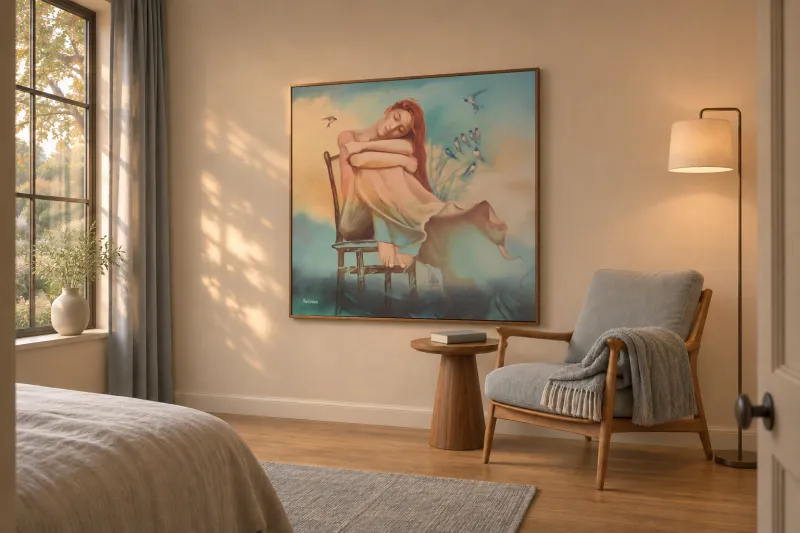
Swallow Song by Svetlana Rezvaya. Room visualization; concept only — scale not verified. Frame shown for illustration.
An owl faces you in Yesterday Morning by Lehel Kovacs. Pale flecks pick out its breast feathers, and you can even see its toes. What is the owl perched on? A thin yellow line crosses the blue near its feet. Farther down, more lines loop under the tail. They look too slight to bear the bird’s weight.
Viewed as a whole, the owl against the blue ground gives a dark study wall a distinct area of color, while the fine yellow lines ask for a nearer view. Place a work like this beside a desk with a clear view from the chair, rather than behind a monitor or tall lamp. Follow the faint mark toward the bird and see whether you can pick it up on the other side. When browsing mysterious paintings for a study, judge whether the detail that intrigues you will remain visible from where you actually sit.
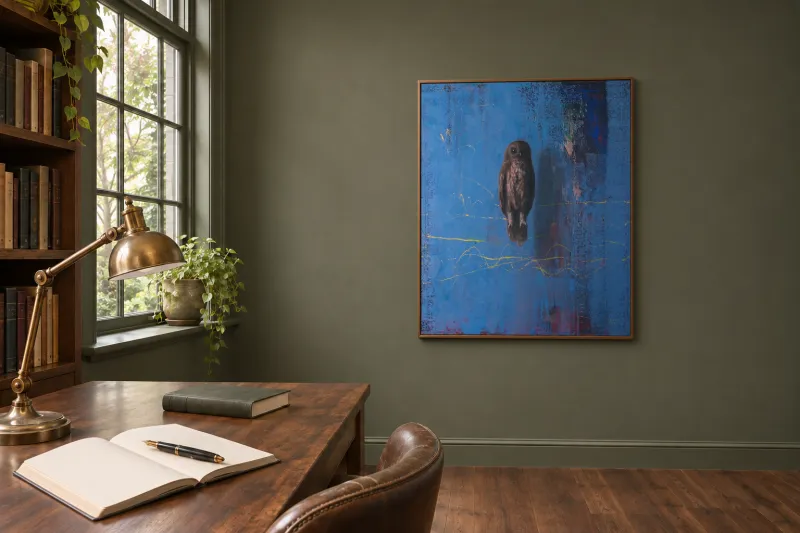
Yesterday Morning by Lehel Kovacs. Room visualization; concept only — scale not verified. Frame shown for illustration. Source and catalog aspect ratios differ.
Choose the wall and viewing position along with the mood. A flowing shape can carry a dreamlike painting across a bedroom; a puzzling detail earns a place where you can sit close enough to investigate it.