






Confidence, Inspiration and Empowerment: Choosing Art for Large Walls and Lounges
A figure can command a large wall from the doorway. From a lounge chair, a gaze or a musician’s hand can matter more than the size of the canvas.
Published:
 Confidence, Inspiration and Empowerment: Choosing Art for Large Walls and Lounges
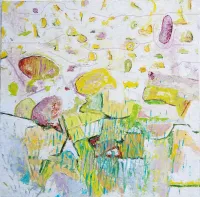
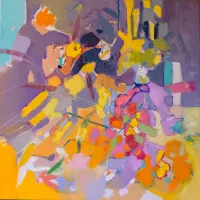
At first glance, you can pick out the white boots in Marisa Macklin’s Bodega Chic. The woman in the patterned dress has planted her feet well apart in front of the fruit stall. There’s confidence in the way she holds her ground amid all those busy shelves. In Gill Bustamante’s One Enchanted Summer, pink blossoms gather near the center, where streaks of green and blue open outward. If a painter’s brushwork inspires you, there are several paths to follow from those flowers.
In Macklin’s market portrait, the pale hat and white boots bracket a long sweep of patterned fabric. Even with shelves of fruit behind her, the woman has a clear silhouette. When comparing paintings that convey confidence on a large wall, consider what else competes for that first glance. Here the shelves, lettering and dress already supply plenty of pattern. The plain wall in the room example gives the woman a clear place to stand; a display of small pictures beside her would split that focus.
Bustamante gives the eye much further to travel. Small blossoms in her blue and green oil painting stand out against a deep patch of blue. A pale streak above the flowers sweeps almost to the top of the canvas. If that movement is the attraction, look for inspiring paintings for a large wall whose brushstrokes lead you out into open color. A broad, low sofa could echo the horizontal format, while the sweeping marks give the wall a sense of movement. This would tie the artwork to the seating group. On a tall, narrow stretch of wall, the upright figure offers a stronger match to the available space.
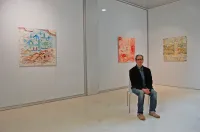
The two canvases call for different patches of wall. The catalog lists Macklin’s upright painting at 48 by 60 inches and Bustamante’s horizontal one at 48 by 36 inches, both unframed. Each takes up four feet across. Macklin’s canvas extends two feet further vertically. Before choosing between them, mark the four corners of each outline on your wall and look again from the doorway. Allow for the frame you plan to use, and include nearby lamps or shelving in that view. The taller outline may sit comfortably on an open wall yet feel crowded beneath a low shelf. The room illustrations help compare the arrangements; the catalog measurements and your own wall determine whether either fits.
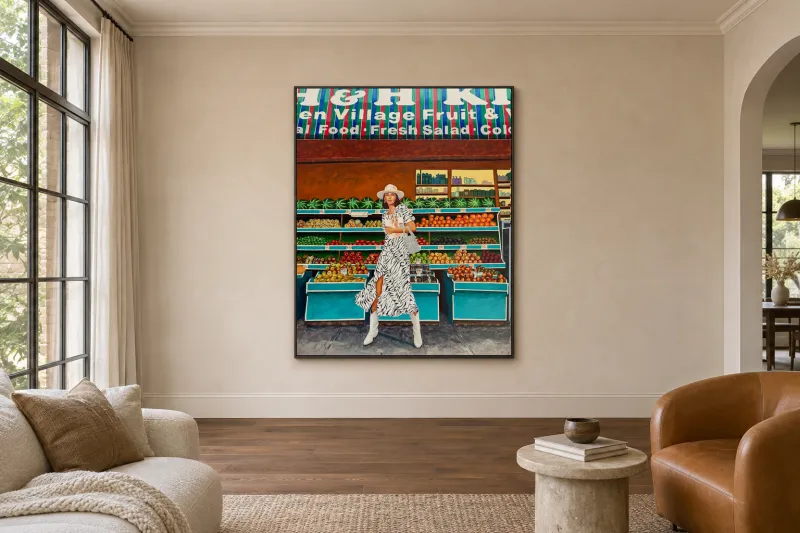
Bodega Chic by Marisa Macklin. Same room and camera as the companion image. Room concept; scale not verified. Frame shown for illustration.
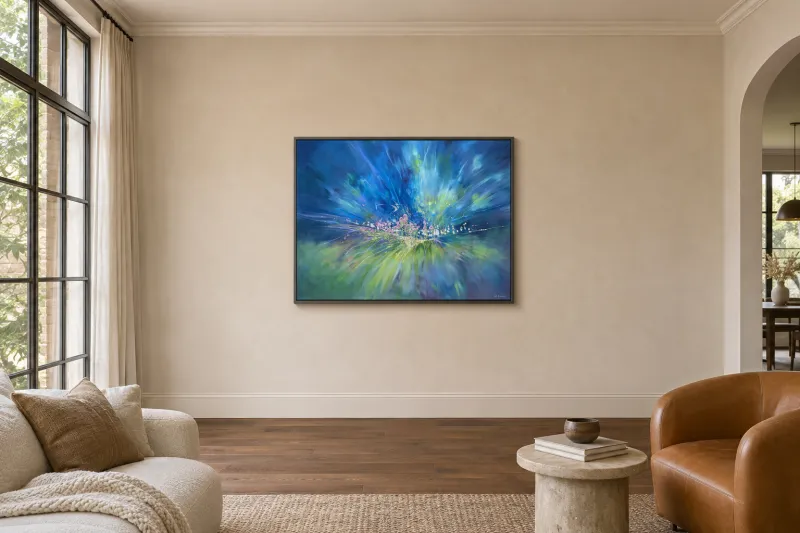
One Enchanted Summer by Gill Bustamante. The same wall and camera keep the portrait and landscape formats easy to compare. Room concept; scale not verified. Frame shown for illustration.
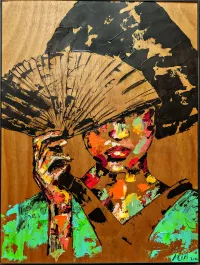
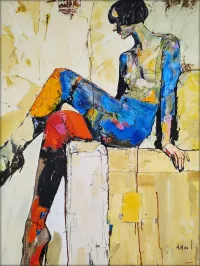
In Summer Body, Adaeze Adinnu brings the brim of a hat around the woman’s face like a second outline. One hand rests on her hip, with the elbow jutting out to the side. Her other arm bends higher against her ribs. That open stance and the look she gives you from beneath the brim are what make a reading of empowerment convincing here.
From a chair, look again at Adinnu’s portrait in a patchwork-colored swimsuit. It may be the face inside the sweep of that brim that holds you, after the bright panels of the swimsuit first caught your attention. For paintings that evoke empowerment in a lounge, that second encounter matters. Across from your favorite seat, the direct gaze would become a recurring part of the room. On a side wall, you could turn toward it when you wanted a closer look. The muted blue-gray wall in the illustration lets the warm ground and swimsuit colors stand apart. Repeating several of those bright colors in cushions would spread the emphasis around the lounge; keeping the upholstery subdued would give the portrait more prominence.
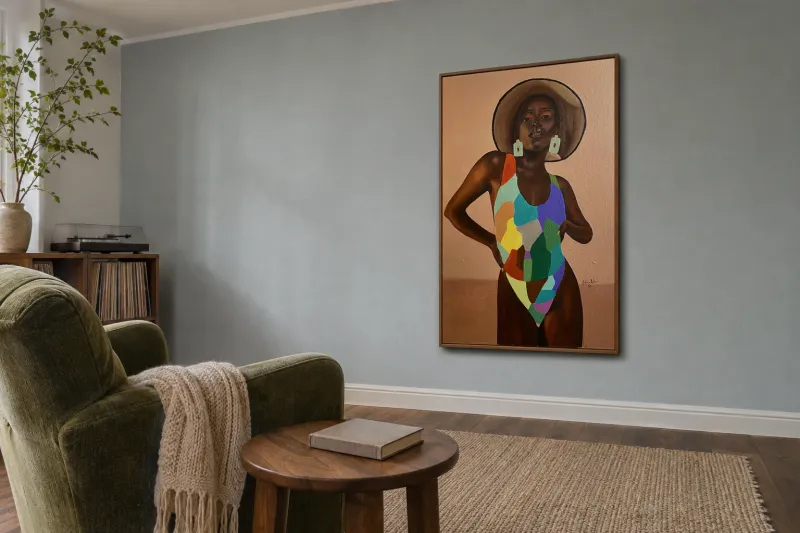
Summer Body by Adaeze Adinnu. Room concept; scale not verified. The complete source image is preserved; its proportions differ from the catalog dimensions. Frame shown for illustration.
Olga Egorov gives the hands two different jobs in Voice of the Violin. The player’s left hand supports the neck of the orange violin. The right hand holds the bow near its end, down by the player’s hip. The bow cuts diagonally across the long blue coat. Most of the action in Egorov’s violinist painting fits into the short span between the player’s chin and the bow hand. At 50 by 70 cm, this canvas offers a different way to furnish a lounge wall: a smaller painting within easy viewing distance of a chair. A broad empty wall could overwhelm its intimate gestures. A nearer position beside the seating area would let the violin and bow reward a closer look without asking the painting to dominate the room.
A musician choosing inspiring paintings for a lounge might linger over the bow hand, imagining the sound of the next stroke. Someone else might come back to the way the orange instrument sits against the blue coat. The choice is also about how much attention you want the wall to ask of you. Give the portrait a prominent position if you want that direct gaze to be part of the seating arrangement. Choose a closer, more contained spot for the musician if you prefer to turn toward a small scene and study it.
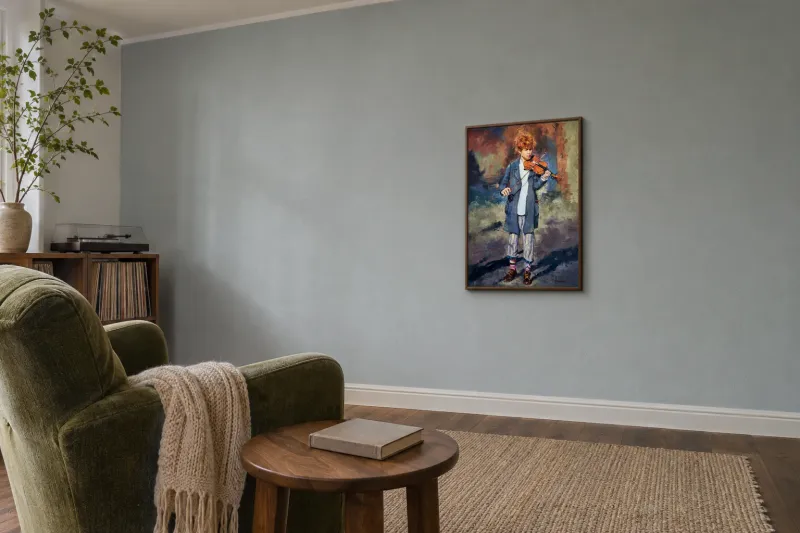
Voice of the Violin by Olga Egorov. Room concept; scale not verified. Frame shown for illustration. Listed as sold when checked on 24 November 2026.