















Warmth or Harmony? Choosing Paintings for Shared Spaces
Two painted tables show how repeated shapes can bring a room together and how a single patch of gold can make a wall feel warmer.
Published:
 Warmth or Harmony? Choosing Paintings for Shared Spaces
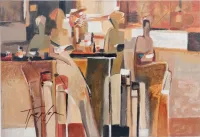
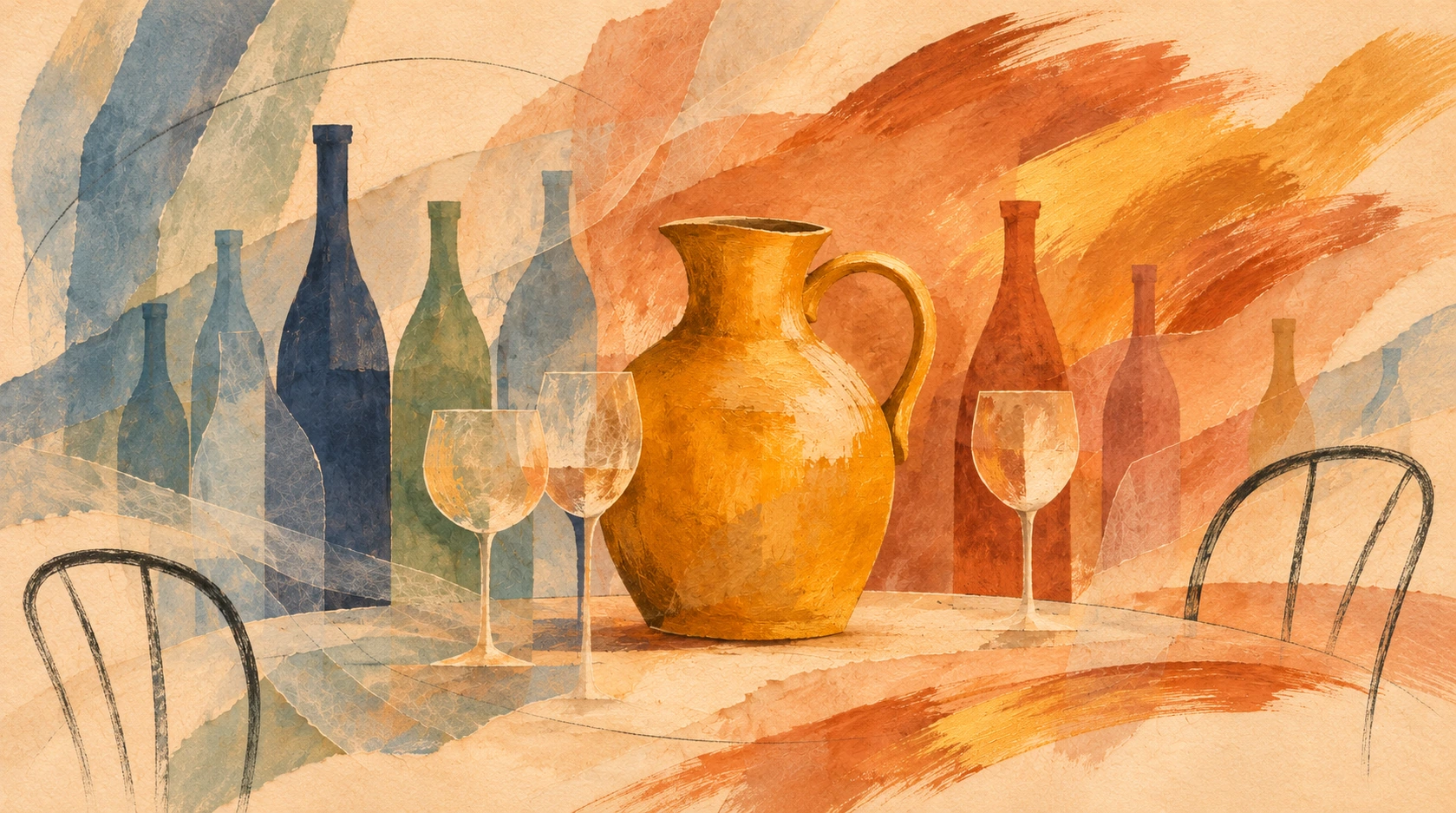
A row of bottles stands shoulder to shoulder in Maia Siradze’s colorful bottles. The harmony starts with those long bottle necks. Even the slim stems of the wine glasses repeat their upright shape. In Serhiy Reznichenko’s Still Life with a Yellow Jug, you might hardly register how many vessels are on the table. The warmth comes from a patch of yellow low on the jug, glowing against the deep red of the tabletop.
A dining room already has a rhythm of chair backs, table legs and place settings. Decide whether the painting should join that rhythm or provide a warm point of focus. From your usual seat, look across the table at the chairs on the far side. If you can see the wall above them, use the spaces between their backs to compare paintings that bring harmony to a dining room. The bottle necks in Siradze’s bottle still life would repeat that rhythm a little higher on the wall. Its many sharp color changes also add activity. Against the plain wall and wood furniture in the example below, the bottles become the busiest part of the setting; patterned wallpaper behind them would make the whole corner more restless.
In Reznichenko’s golden still life, a tall, dark bottle stands close to the yellow jug. The dark shape brings out the curve of the jug beside it. That concentrated gold gives you a focal point to compare when browsing paintings that bring warmth to a dining room. In the room example, the yellow and ochre relate to the oak table, while the red adds a richer accent above it. A simple table setting would let that painted tabletop remain prominent. If you prefer patterned dishes, set them out before choosing: the extra pattern may be welcome at a lively dinner table, but it is a poor match for a corner you want to keep visually quiet.
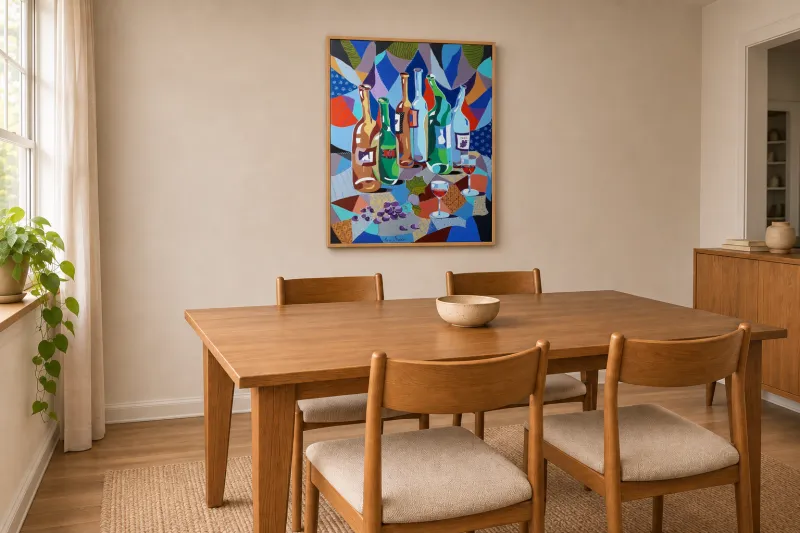
colorful bottles by Maia Siradze. Room visualization — concept only; scale not verified. Frame shown for illustration; product is unframed.
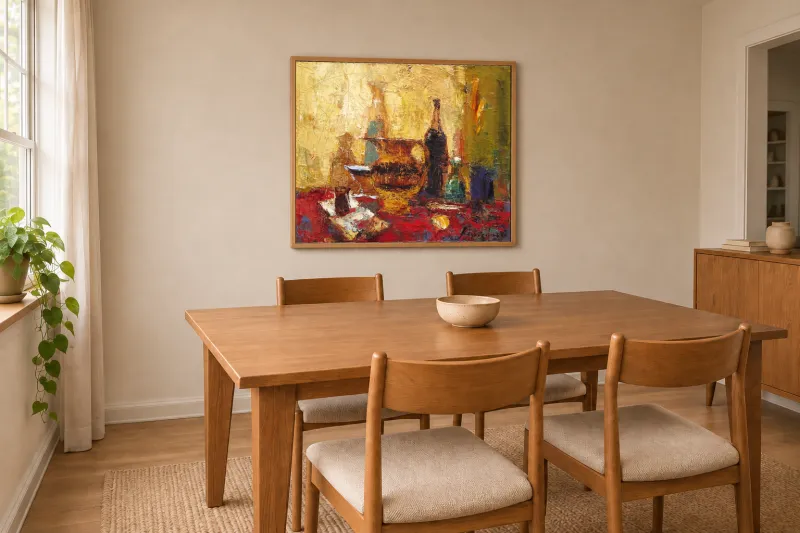
Still Life with a Yellow Jug by Serhiy Reznichenko. Room visualization — concept only; scale not verified. Frame shown for illustration; product is unframed.
There’s a good reason to try a painting with plenty of blue when looking for paintings that bring warmth to a living room. In Under the Sun Umbrellas by Olga Egorov, a broad stretch of sea gives the nearest orange-and-yellow umbrella something to stand out against. Beyond it, spots of pink and yellow dwindle along the shore.
Think about a color you already see from your sofa. Beside a blue cushion, Egorov’s beach painting could let the sea carry that blue onto the wall and leave the umbrella as a small flare of orange. If the umbrella is what sold you on the painting, check which seat gives you the clearest view of the lower edge. A tall lamp or the back of another chair can hide the very thing you bought it for.
From a doorway, Stephanie Ho’s 2 Wheels 16 looks almost empty across the top. Tiny cyclists spread out across a pale field, and there is a wide stretch of pale canvas above the last row of riders. Move closer to Ho’s painting of cyclists and the little upright marks resolve into individuals. The nearer riders are larger, with space on either side of their wheels.
Check the view from both the door and the seats when choosing among harmonious paintings for a reception area. On the way in, see whether the desk or a monitor would hide the lower part of the painting, where the cyclists are. A clear stretch of wall beside the waiting chairs would give visitors a closer look at the riders. Keep notices and leaflet holders on a separate surface so the pale field can provide a visual pause. This is a subtle painting for the seating area; its tiny figures would contribute little if visitors only saw it from the entrance.
Set the dining table as you normally use it before making the final choice. A photograph of that everyday arrangement is more useful here than an empty-room view: it shows the shapes and colors the painting will live alongside.