


Painting Peace with Analogous Color Harmony
Analogous color harmony creates peaceful paintings through soft transitions, visual balance, and emotional calm—seen beautifully in watercolor, landscape, minimalist, and interior-ready artworks.
Published:
 Painting Peace with Analogous Color Harmony
There are paintings that speak loudly, and there are paintings that lower the volume of a room. Analogous paintings belong to the second category. They do not shock the eye into attention. They do something subtler and, in many homes, something more valuable: they create a sense of peace
The reason lies in color itself. In painting with analogous colors, artists work with hues that sit next to each other on the color wheel—blue with blue-green, green with yellow-green, orange with red-orange. Because these colors share visual DNA, they move together easily. The eye does not need to jump. It glides. That glide is part of what makes an analogous colors painting feel restful rather than restless.
This kind of harmony matters even more today, when walls are asked to do emotional work. A painting is no longer just decoration. It can quiet a bedroom, soften a living room, or create a contemplative pause in a reading corner. That is where analogous painting becomes especially powerful: it creates peace not by being empty, but by being coherent.
The calm intelligence of analogous watercolor paintingWatercolor may be the most natural medium for this kind of peace. It allows color to arrive gradually, as if it were breathing onto the paper rather than being forced into it. In an analogous watercolor painting, transitions can feel almost atmospheric. One tone dissolves into the next. Edges soften. The whole image seems to hold light instead of trapping it.
A beautiful example appears in analogous watercolor paintings, where Between the Trees by Dalia Segev shows how greens, earth notes, and pale sky tones can build a scene that feels hushed rather than dramatic.

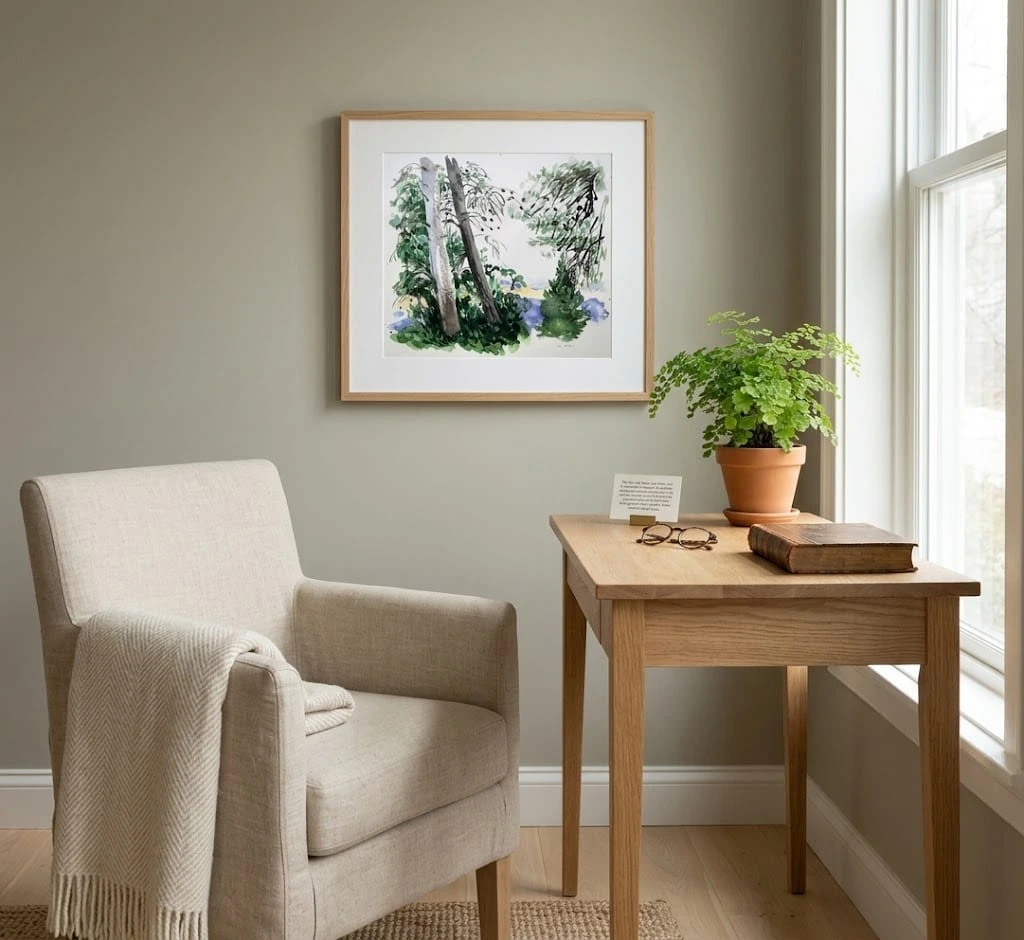
A 28.00 × 26.00CM analogous watercolor painting by Dalia Segev staged in a reading corner.
This is the kind of painting that belongs near silence: a reading nook, a writing desk, a hallway where the day begins slowly.
Analogous landscape painting and the art of visual breathingLandscape painting has always been close to the language of peace. Even before we speak about color theory, a landscape offers distance, horizon, weather, and rhythm. But when that landscape is built with neighboring hues, its calm becomes more complete. An analogous landscape painting does not simply depict nature; it adopts nature’s own logic of gradual transition.
A strong example can be found in analogous landscape painting, especially in Forest Landscape by Nicolae Blei.

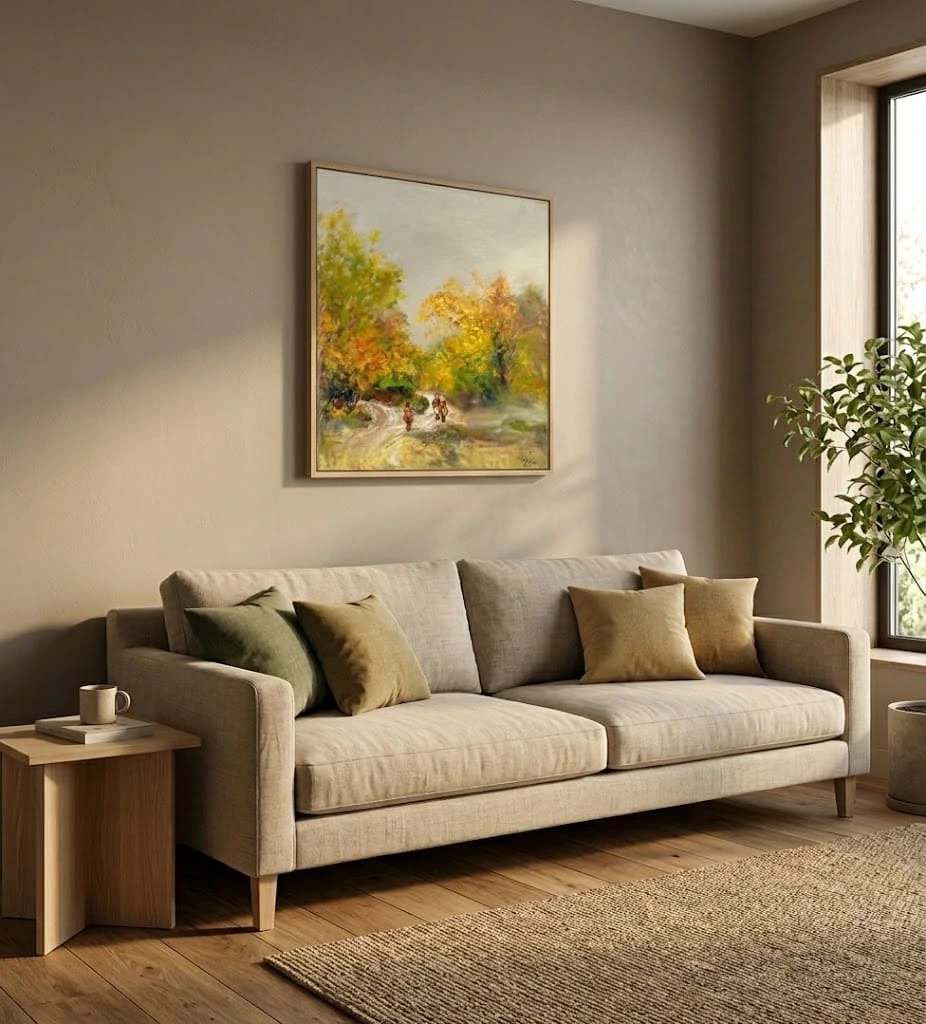
A 60.00 × 65.00CM analogous landscape painting by Nicolae Blei staged in a living room.
What makes this work peaceful is not only the subject of trees and land, but the refusal of harsh contrast. The palette stays in conversation with itself. The result is a painting that feels like a long exhale.
Nature paintings that restore rather than overwhelmPeace in painting does not always come from stillness. Sometimes it comes from immersion. Nature-themed analogous works can create a restorative feeling through repetition: leaves, branches, reflections, water, and changing light all echo one another in color and form. This kind of harmony feels alive, but never noisy.
That quality appears beautifully in analogous nature paintings, particularly in Nature Weaves a Spell by Gill Bustamante.

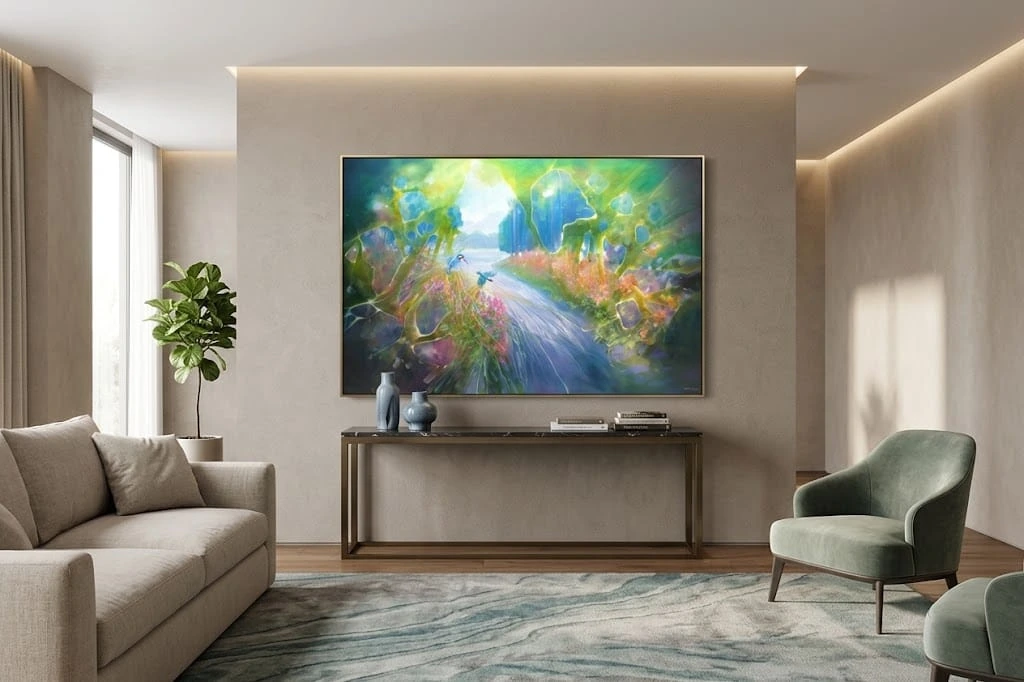
A 180.34 × 104.14CM analogous nature painting by Gill Bustamante staged in a living room.
This is a reminder that peace is not always blankness. Sometimes peace is a rich atmosphere that still feels held together. The image invites attention, but not tension.
Minimalism and the quiet discipline of colorMinimalist art is often misunderstood as absence. At its best, it is concentration. It removes distraction so that balance can become visible. When minimalism meets analogous harmony, the result can be deeply meditative. There is less to look at, but more room to feel.
That mood is present in minimalist analogous paintings, especially The Contours of Harmony by Alexander Aksyonov.

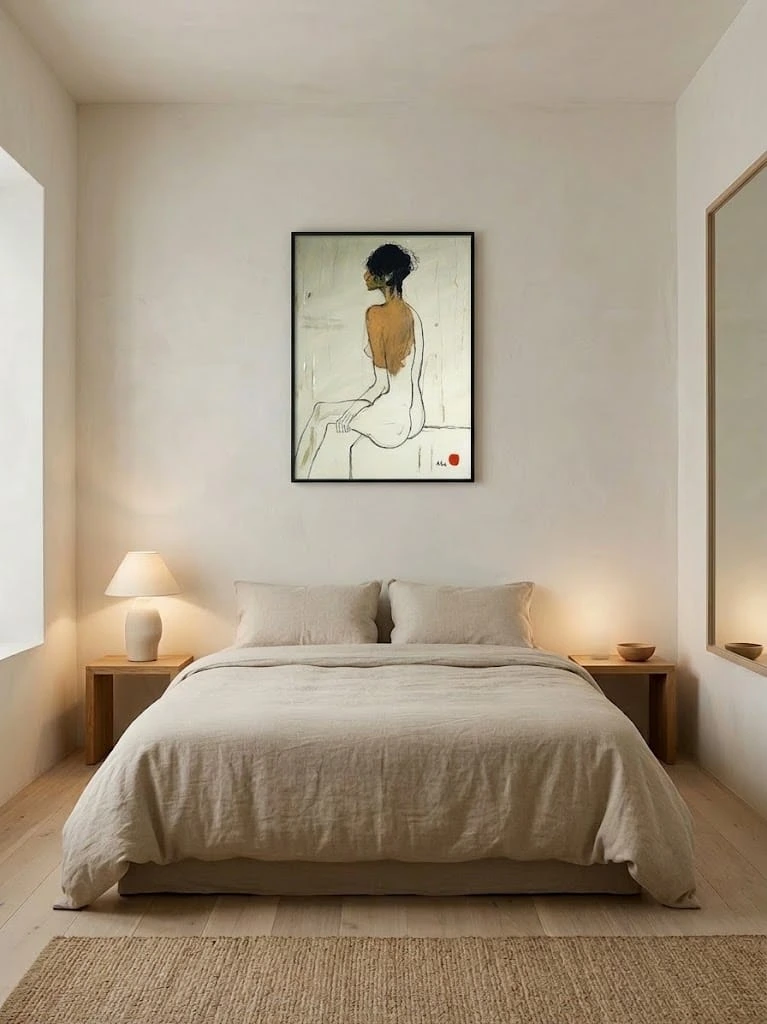
A 45.00 × 60.00CM analogous figurative painting by Alexander Aksyonov staged in a bedroom.
A painting like this creates peace by reducing visual friction. It does not demand immediate interpretation. It lets the room breathe around it.
Warm impressionism and peaceful lightNot every peaceful painting has to be cool-toned. Warm analogous palettes can also create calm, especially when handled with impressionist softness. Orange, amber, coral, and muted gold can feel enveloping rather than exciting when their relationships are gentle.
That warmth appears in analogous impressionist paintings, where Through the Sunset by Olga Egorov offers a scene shaped by glow rather than glare.

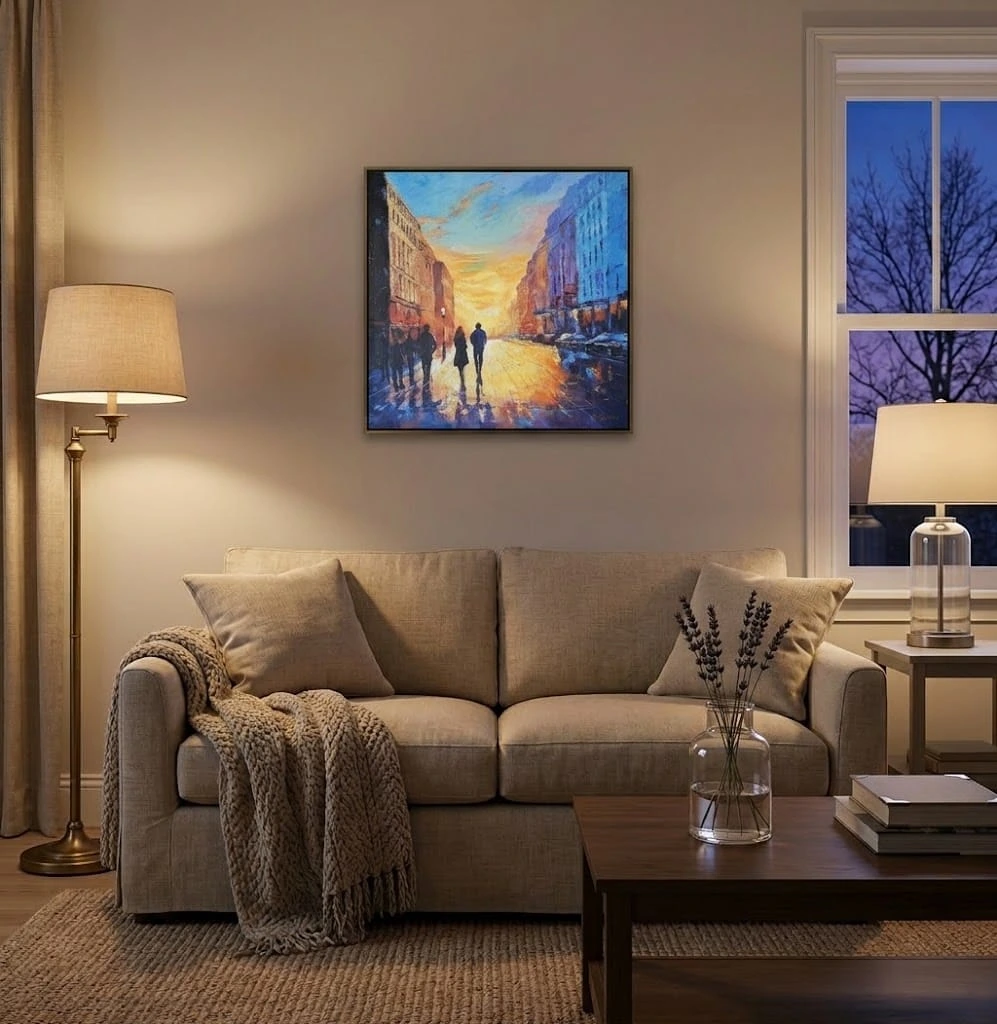
A 60.00 × 60.00CM analogous city painting by Olga Egorov staged in a living room.
This is a useful lesson in choosing peaceful art: calm is not only about coolness. It is about how color moves. Warm colors can soothe when they remain close enough to feel related.
Choosing peaceful paintings for living rooms and bedroomsWhen selecting art for a shared room, peace usually means openness. In that case, a work like A Warm Summer’s Day by Katrina Avotina, featured within analogous paintings for living room, makes sense.

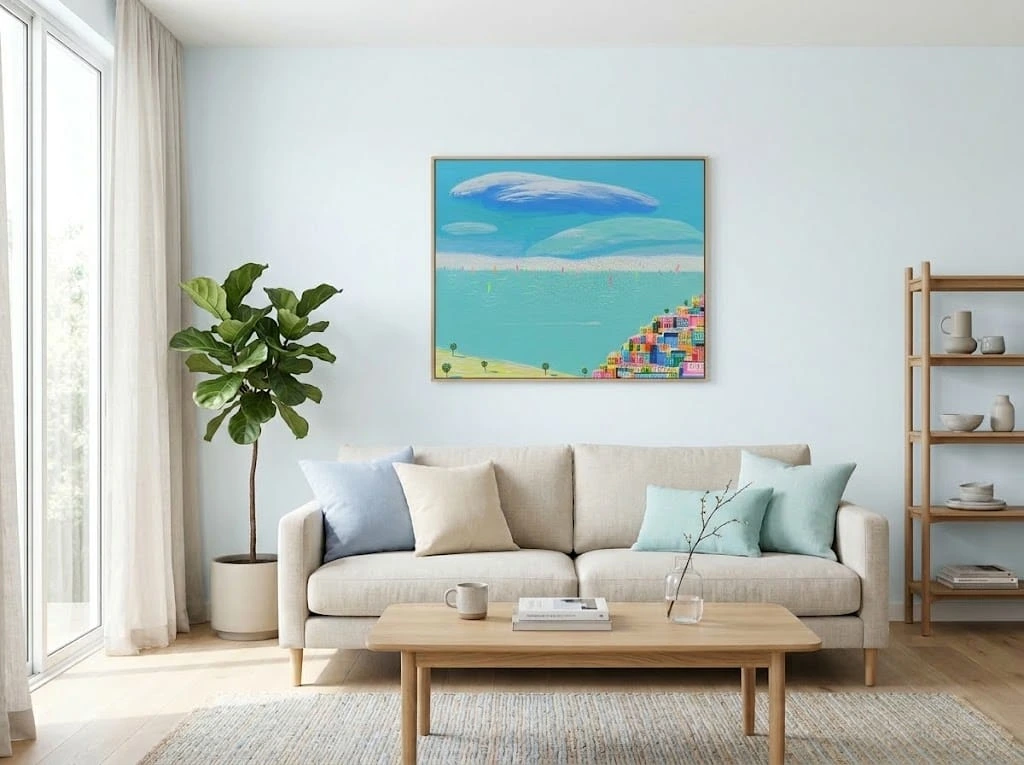
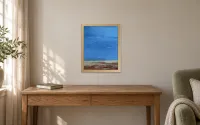
A 50.00 × 40.00CM analogous coastal painting by Katrina Avotina staged in a living room.
Its softer blues and airy transitions help a room feel more breathable.
For a more private space, the formula becomes even gentler. In analogous paintings for bedroom, Forest by Gabi Elkayam is a strong example of sleep-friendly calm.

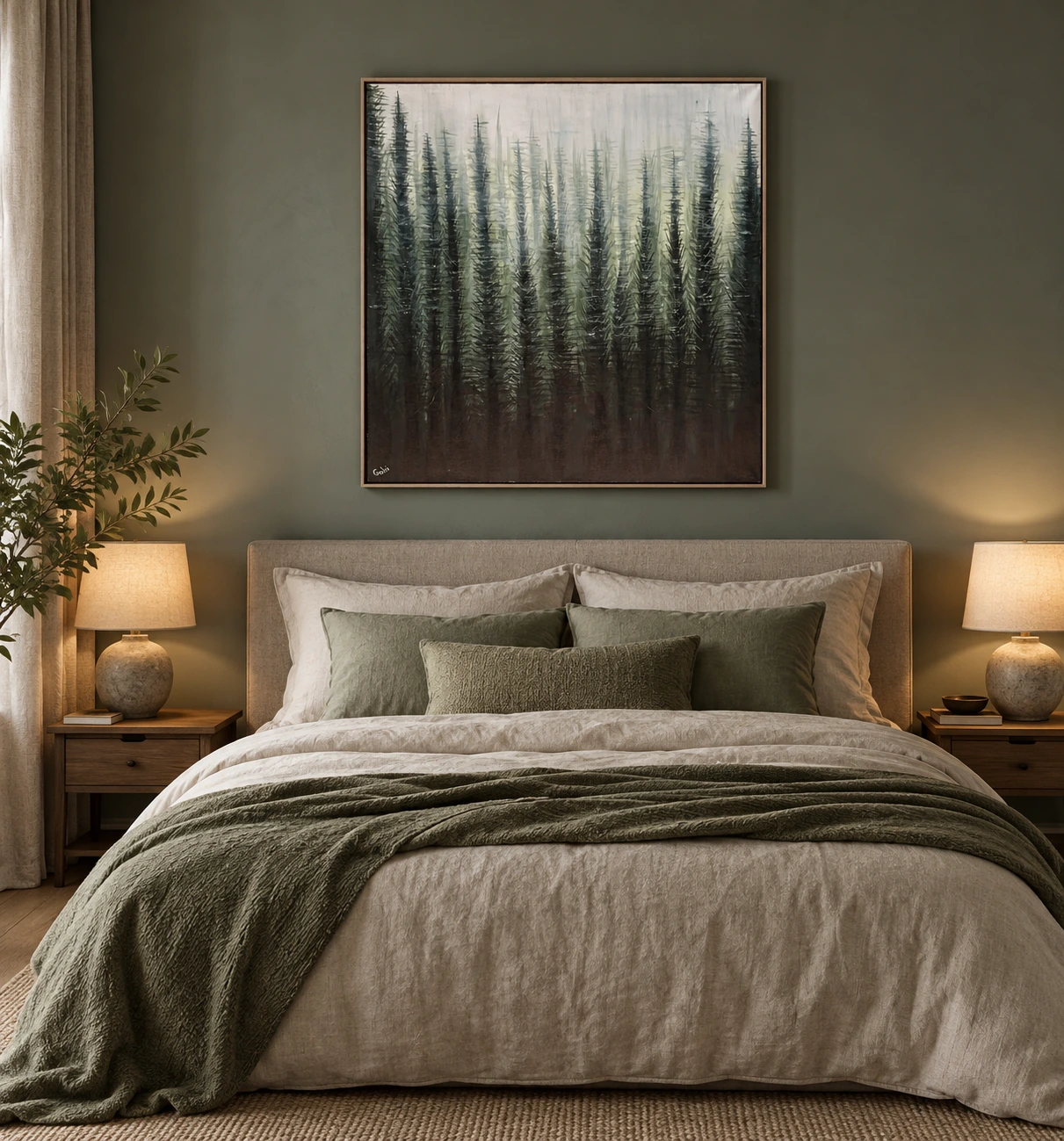
An 80.00 × 80.00CM analogous forest painting by Gabi Elkayam staged in a bedroom.
Muted greens, softened contrasts, and restrained rhythm make this the kind of work that quiets rather than stimulates.
ConclusionThe real beauty of painting with analogous colors is that it turns harmony into atmosphere. It does not merely coordinate hues; it shapes emotion. Whether in an analogous watercolor painting, an analogous landscape painting, or a minimalist composition built on neighboring tones, the effect is often the same: the viewer feels less pushed, less interrupted, and more able to stay.
That is why analogous painting matters. It is not only a color strategy. It is a quiet way of making space for peace.