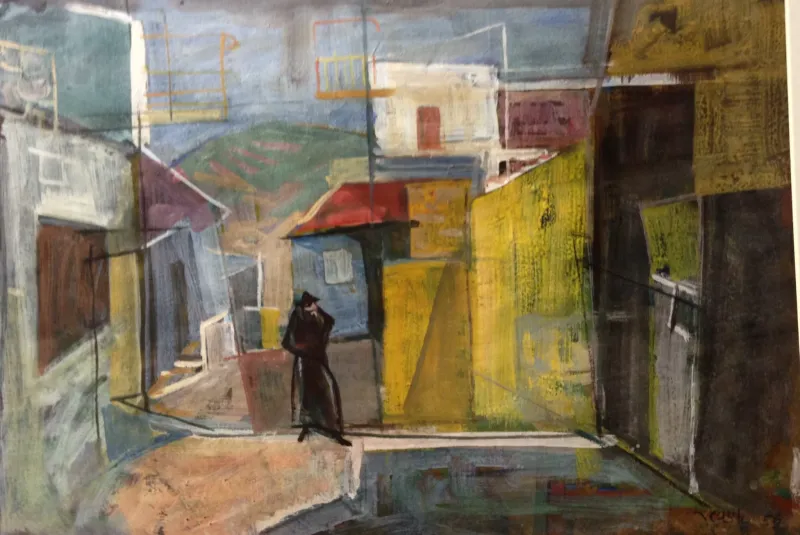
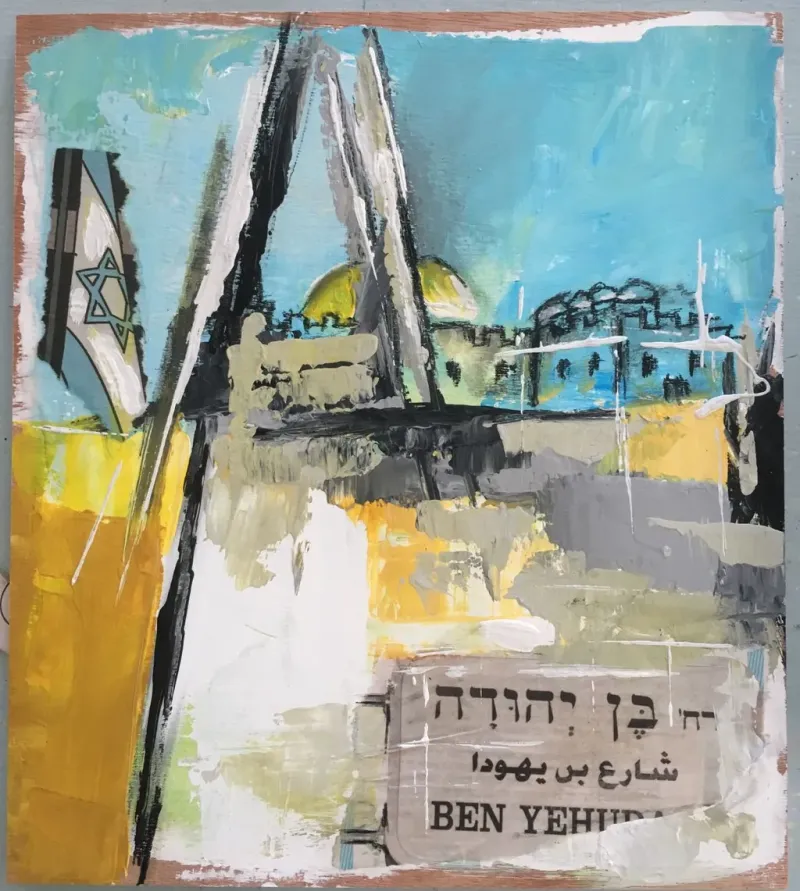
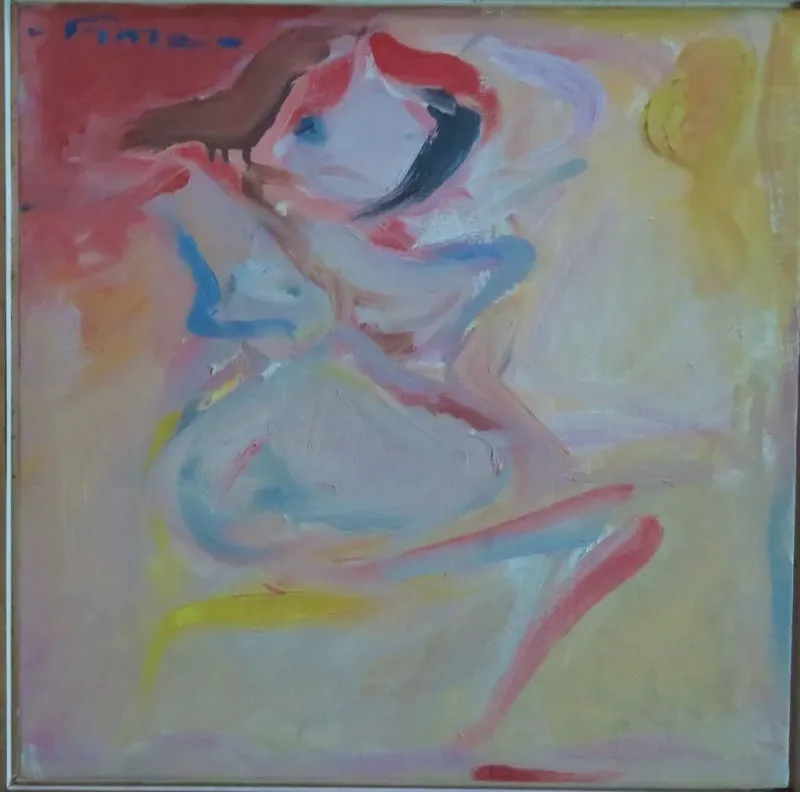
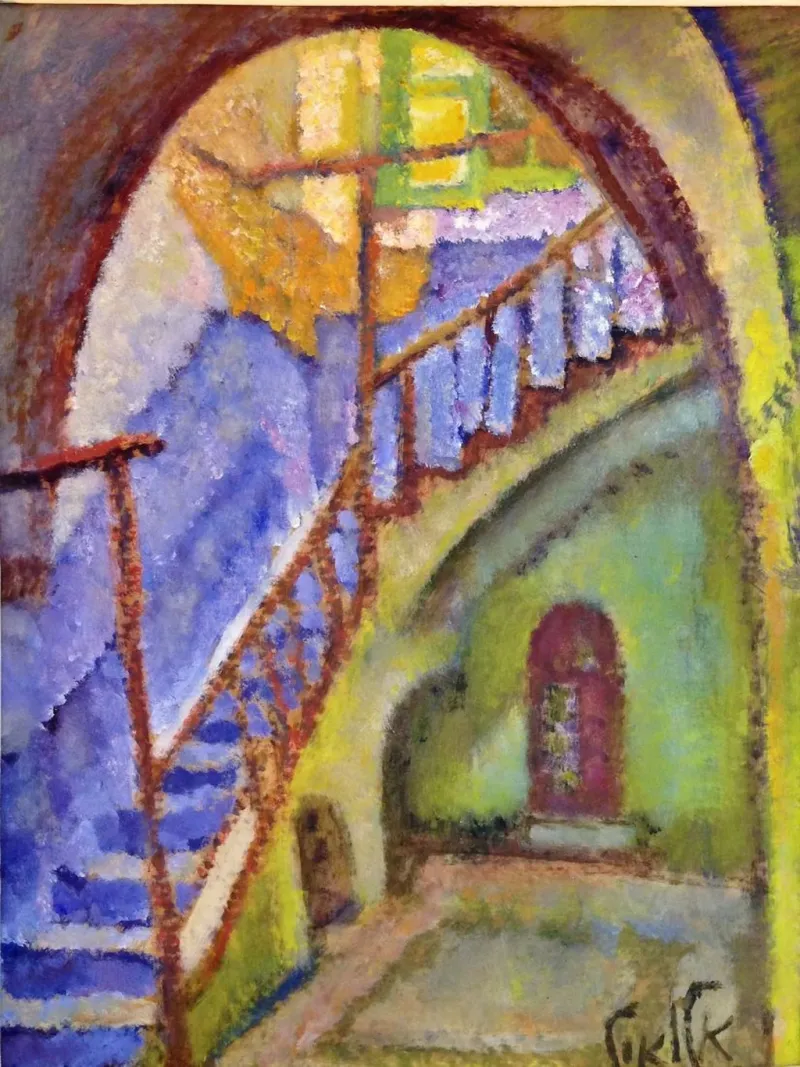
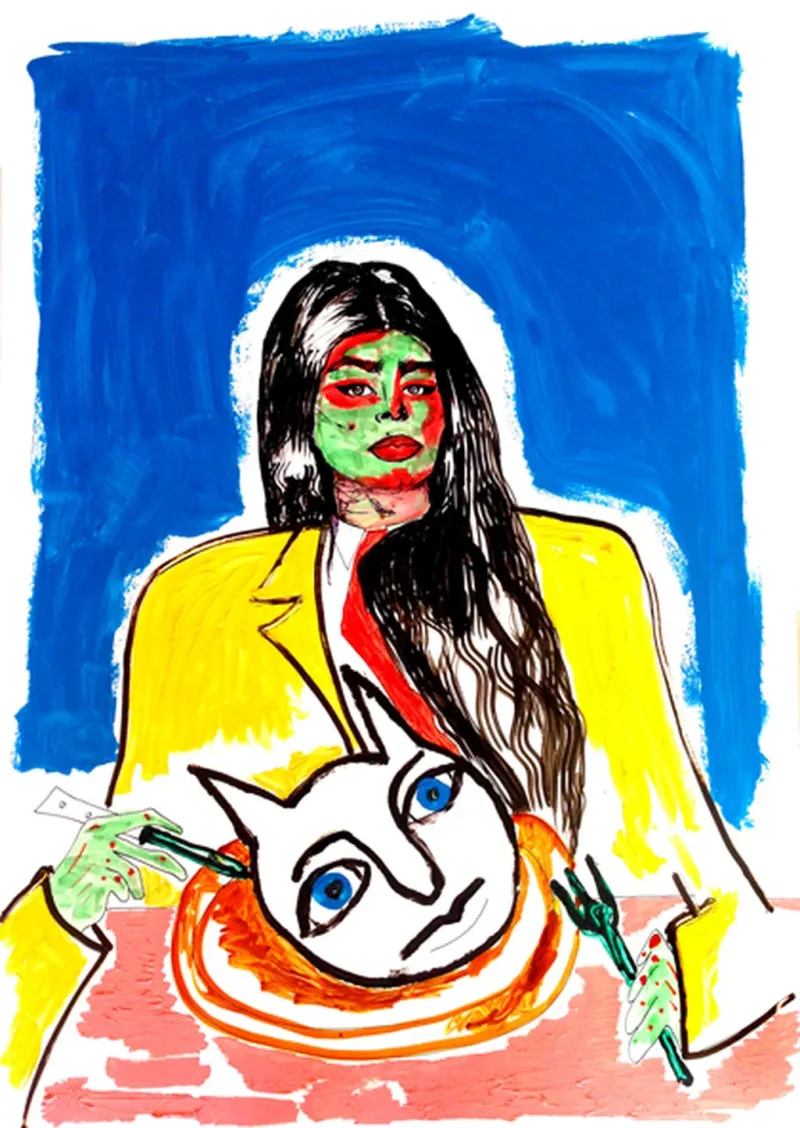
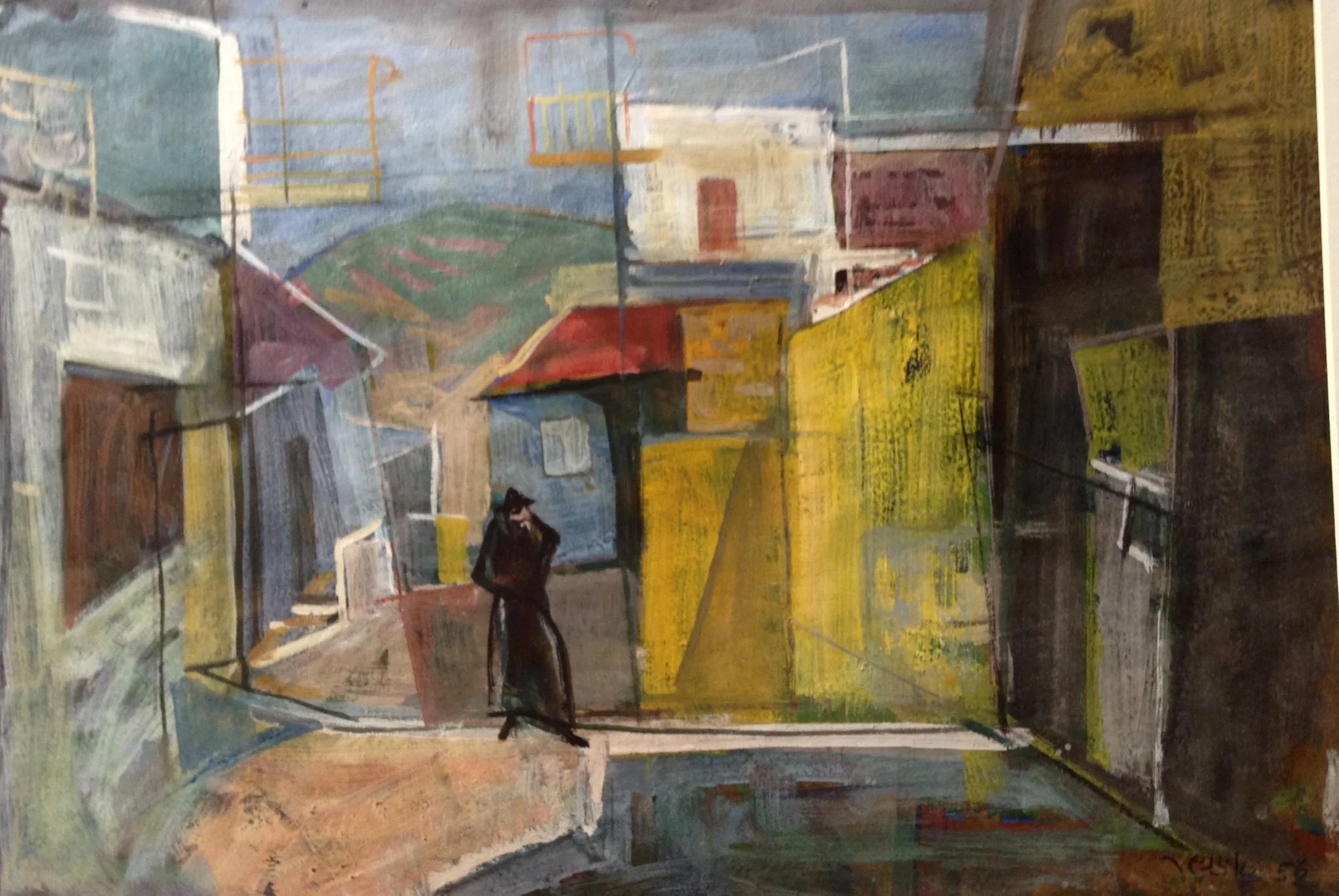
The composition is built from interlocking architectural planes that compress the street into a tight, almost stage-like space. Walls, roofs, and passages are simplified into angular blocks, so the eye moves less by perspective than by shifts in shape and tone. Ochre and dusty yellow hold the right side with weight, while cooler greys and shadowed neutrals deepen the left and center. Within that structure, the small figure becomes a visual anchor, not through detail, but through contrast and placement. The painting rewards slow looking because its city scene is continuously reorganized by formal decisions.
Artistic Perspective
This is a strong example of authored modernist observation: a recognizable street transformed through flattening, simplification, and spatial experimentation. Rather than describing Mea Shearim literally, Eisensher treats architecture as a formal language of mass, interval, and pressure. That approach gives the work lasting interest beyond subject matter alone. His expressionist and cubist leanings are felt in the tension between place and construction, making the painting especially compelling for collectors drawn to urban works with clear painterly intelligence.
Emotional Resonance
The emotional effect comes from restraint. The lone figure, enclosed by dense walls and muted light, suggests isolation without overstating it. Because the scene is quiet and sparsely animated, the viewer is drawn into a more reflective response—part curiosity, part melancholy. The painting does not dramatize loneliness; it lets it emerge through distance, compression, and subdued color. That measured feeling is what gives the work its staying power.





 in artwork
 in artwork